The Comparison Game

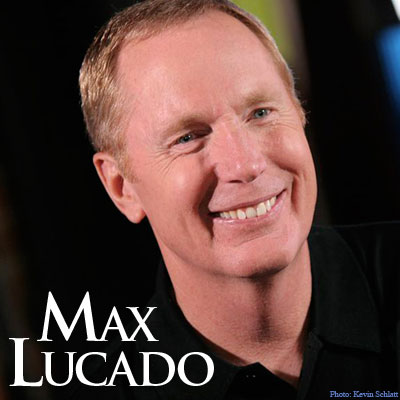
Pastor and best-selling author Max Lucado was interviewed in the Summer 2011 issue of Leadership Journal. Because I feel called to both pastor and write, like Max Lucado, it’s a great temptation to give in to the sin of envy when I think of Max. I suspect his grocery list would sell well. Yes, I have wished I could write like Max Lucado.

In the interview Max said, “Some pastors, like Tim Keller or John Piper, are different than I am, and they excel at reaching those deeper thinkers. I listen to their sermons, and they’re just at a different level. And I think that’s phenomenal. I’m so grateful for people like that. I speak to folks who don’t dwell at that altitude.” (p. 26) Max Lucado is no Tim Keller or John Piper, and he’s OK with that.

Come to think of it, I’ve been tempted to envy the speaking, writing, and pastoral ministries of both Tim Keller and John Piper (both of whom I regularly read) as well as that of Max Lucado! I confess that I can be quite a mess at times.

In the same issue of Leadership Journal Eugene Peterson, another favorite pastor/author of mine, was interviewed. The article includes an excerpt from his book, The Pastor (which I’ve read – excellent!) In the excerpt Peterson writes, “Along the way, I want to insist that there is no blueprint on file for becoming a pastor. In becoming one, I have found that it is a most context-specific way of life: the pastor’s emotional life, family life, experience in the faith, and aptitudes worked out in an actual congregation in the neighborhood in which she or he lives – these people just as they are, in this place. No copying. The ways in which the vocation of pastor is conceived, develops, and comes to birth is unique to each pastor.” (p. 53)

When I’m tempted to play the comparison game I have to remind myself that it’s a game the Lord never calls me to play. When I do I never win in the long run! I’ve struggled with this enough that I did a sermon series on the topic, then self-published the material in a book called, interestingly enough, The Comparison Game.

One of my favorite scriptures to use as an antidote against the sin of envy in the ministry is found in a statement Jesus made to Peter. It occurred after Jesus’ resurrection, when He was walking with Peter and had hinted at how Peter’s life would go in his final days. Peter then asks Jesus about John, who was walking behind them. What would happen to him? Jesus said to Peter,“What is that to you? You must follow me.” (John 21:22)

When I start comparing my writing ministry and/or pastoral ministry to someone else I remember Jesus’ words to Peter, and own them for myself. “What is that to you? You must follow me.”


The Stewardship of Grace

Ever notice how you can be reading along in the Bible and come across a statement in a part of the Bible familiar to you but find it to be completely unfamiliar and new? Such an experience happened this morning in my devotional reading. The line is in Paul’s letter to the Ephesian church, the end of verse 2 in chapter 3. Paul writes of “the stewardship of God’s grace that was given to me for you…”

I read it again… “the stewardship of God’s grace that was given to me for you…” I realized that part of my stewardship as a pastor is the stewardship of God’s grace given to me which is to be spent on the people I serve. This giving of the grace given to me has as much to do with stewardship as does the three “t”s of time, talent, and treasure upon which I so often preach!

I rehearse how I don’t deserve God’s help in being a pastor because I’m so far from who I should be in Christ, but, by His grace, He uses this imperfect vessel called Dave Claassen anyway. I’ve been freshly reminded that part of my ministry is to pass on this grace I’ve received to those I serve. Because I’m being gifted every day with undeserved favor from God, I’m to be re-gifting this toward my people in thinking, feeling, and acting favorably toward them even when I think they don’t deserve it. Grace to me – grace to them!

I want to be able to picture my congregation, the people I’ve been called to serve, and pen these words in my heart to them that Paul penned to the Ephesian church. In my heart and mind I want to affirm “the stewardship of God’s grace that was given to me for you…”

God’s Sovereignty and The Weather

“JimmyJams” recently commented on my post about grumbling. He writes that the weather is “an interesting metaphor for God’s sovereignty–you can’t change it.”

Jimmy has done a great video on this theme so I thought I’d share it. Fun!

A Case of the Grumbles

Under my breath I’ve found myself muttering “Grumble, grumble.” Sometimes I don’t actually mutter, but I’m grumbling nevertheless.

I grumble against other people, especially the sheep of the flock I’ve been called to tend. The apostle James makes it clear I shouldn’t be doing this. “Don’t grumble against each other, brothers, or you will be judged.” (James 5:9) O…..K, that sounds serious to me!

But I fear my grumbling is not just against the sheep of God’s pasture I serve but also against the Good Shepherd I serve. When I complain about the lack of results I see, the problems I have to deal with, and the seemingly insurmountable challenges that are before me in ministry, am I not really directing much of this against God?

It’s important for me to be reminded just how serious an offense it is to grumble against God. Such a reminder comes from the account of the Israelites in the wilderness and what God said to them. “In this desert your bodies will fall – every one of you twenty years old or more who was counted in the census and who has grumbled against me.” (Numbers 14:29) The psalmist wrote of this that “they grumbled in their tents and did not obey the Lord.” (Psalm 106:25) Substitute “parsonage” or “pastor’s house” for “tents” in this last passage to drive home the application.

I’ll confess I don’t always see grumbling as a serious issue. I should; it’s quite clear in scripture that grumbling is a sin. I suppose, as far as sins go, I see it as a “white collar” type of crime, but a crime is still a crime; a sin is still a sin.

When I give some thought as to why grumbling against God is wrong, is sin, is serious sin, I come to the conclusion that in grumbling I question God’s goodness. I’m strongly hinting that He is not playing fair with me.

So, OK, grumbling is serious sinning, but I also know that the psalmists were often brutally honest in expressing their feelings to God; that’s why I enjoy reading the psalms so much. An honest pouring out of the heart to God is good, this is what I counsel my hurting parishioners to do, and I do it myself. What I’m realizing is that I need to ask for the Lord’s help in discerning between honest-to-God praying and grumbling.

The bottom line is that this grumbling needs to go! I must take the apostle Paul’s admonition to the Philippians to heart when it comes to the work of my ministry. “Do everything without grumbling…” (Philippians 2:14)

Competing with God for His Glory

“If we insist on being achievers, seeking God so that others might admire our faith, our commitment, or our dedication, we become God’s competitors, trying to steal some of His glory.” (Gary Thomas, Thirsting for God, eBook loc. 272)

I doubt I rarely, if ever, do anything from a pure motive.  As a pastor I want to promote Christ in my ministry, but sometimes there slips in an element of self promotion.

This is one more reason, a personal reason, why I must preach a message of grace.  God chooses to love me and use me in spite of my mixed motives in ministry!

Famous Pastors Who Have Left Pastoral Ministry

This article by Andy Rowell appeared in Christianity Today almost two years ago, but I have a copy of it in my files and thought it would be worth sharing.  I’ve noticed too, as author Randy Rowell points out, that when pastors gain a larger platform as well-known pastors, writers, and speakers, they tend to leave  the pastorate.  As Rowell suggests, they are hopefully in God’s will in making the transition.  But then there’s the rest of us who are called to plod along as pastors.  Check out the article  HERE.

The Busy Pastor

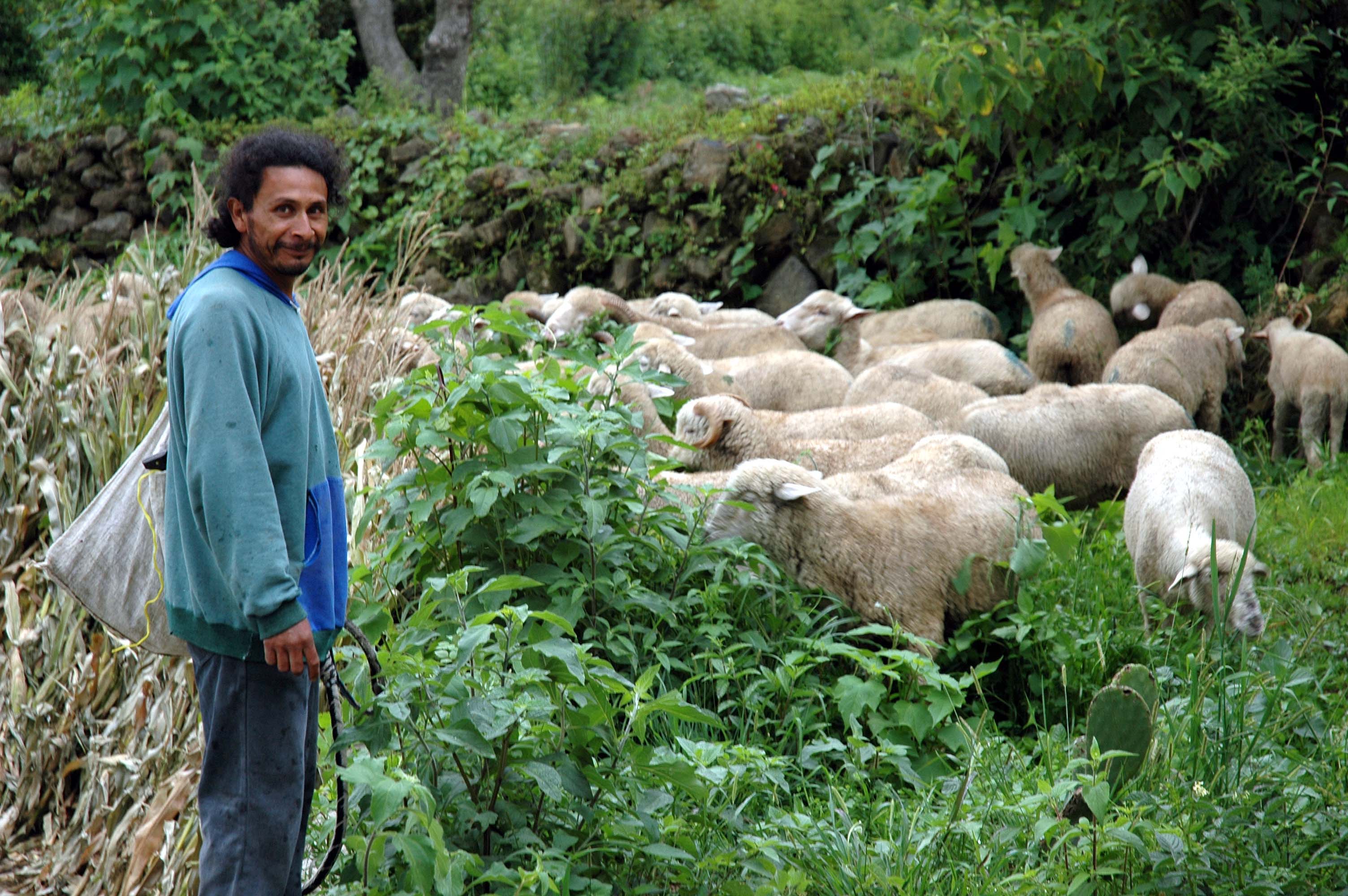
A neighbor of our daughter and her family
in Mexico shepherding his flock

I have had to learn again and again that to be about my Heavenly Father’s business means I must not be too busy. My busyness and His business are often not the same work!

Eugene Peterson writes, “A sense of hurry in pastoral work disqualifies one for the work of conversation and prayer that develops relationships that meet personal needs. There are heavy demands put upon pastoral work, true; there is difficult work to be engaged in, yes. But the pastor must not be ‘busy.’… there must be a wide margin of leisure.”

Peterson then quotes Henri Nouwen. “Without the solitude of heart, our relationships with others easily become needy and greedy, sticky and clinging, dependent and sentimental, exploitative and parasitic, because without the solitude of heart we cannot experience the others as different from ourselves but only as people who can be used for the fulfillment of our own, often hidden, needs.” (Five Smooth Stones for Pastoral Work, Eugene Peterson, pp. 61-62, Eerdmans, 1980)

I have had the opportunity on various occasions to watch a shepherd tend his flock of sheep. I don’t ever recall seeing shepherds rush about. They tend to walk slowly; mostly they just stand. Why, as the shepherd of God’s flock of people, do I feel prompted to always be rushing, giving the impression I must be somewhere else other than where I am? Lord, wherever you have me be today, help me to be all there for as long as you want.

My Main Job at The Church

John Ortberg, pastor of Menlo Park Church in Menlo Park, California, wrote a good article in Leadership Magazine, Summer 2011. Here’s a brief reference in the article that struck a chord with me.

“Last fall I asked a friend, ‘What’s the main thing I need to be doing for our church to be a place where lives are being transformed?’ He said, ‘Your primary job is to experience deep contentment and joy and confidence in your everyday life with God.’

Now I have that on a sign that hangs above the door of my office. It reminds me, before I write sermons or lead meetings or do planning, that my main job at the church is to live in deep contentment, joy, and confidence in my everyday walk with God.”

Ministry By Meandering

I try to schedule my day and plan ahead, but I’ve also found that God’s agenda for me is frequently different from mine. Take yesterday as an example.

In the morning I went to the hospital and prayed with a woman from our church before she went to surgery. I figured on seeing her husband as well, and I did, but I also met her children and step-children who were also there. We waited for a good twenty minutes before we were invited back to the prep area so I had a good chance to talk with the family that I don’t believe have a church connection.

Later that morning I was at our local library and ran into a man who’s working full time but also getting a Bible degree at a local college. We had a chance to talk for a few minutes.

After lunch I had planned to visit a lady in rehab but felt prompted to visit another man in our church instead who’s dealing with a major health issue. I stopped by his house and he wasn’t home, but he drove up just when I was about to leave. When I was leaving his wife pulled up and I helped carry some groceries into the house, something he couldn’t do.

My next stop was Starbucks (you have to deal with the necessities of life). I was doing some e-mailing on my laptop when a man I know came in to get a coffee. He has a PhD, is a professor at the University of Toledo, just got a Masters in Theology, and is also a part-time associate pastor at a local church. He was glad to see me and wanted to get my opinion on his future plans with which he’s grappling. I felt honored that he wanted my input.

Later that evening my wife and I helped out at our church’s fish fry and I met a man I had worked with in a ministry situation 30 years ago. After the fish fry Diann and I went to an “open mic” night at a storefront church where I heard a guy deliver the good news of Jesus in rap. I don’t normally like rap but, Wow, he was good!

I’ve decided that discerning God’s will on a day-to-day basis is not something you can always plan out ahead of time. Sometimes we discover God’s will by wandering around, allowing for the serendipitous Spirit to lead.  It’s interesting that when people build a water drainage ditch they make it straight.  When God makes one He makes a winding river.

I’m trying to appreciate the fact that being a pastor allows me to wander about as I see fit, trying to be led by the Lord. I’m guessing that pastors of very large churches spend more of their days in their offices and at one meeting after another (I have enough of those in the evenings, but that’s another story). I’m grateful I can flit about a bit. More and more I’m trying to pray,

“Lord, where would you have me go today,
what would you have me do,
and what would you have me say?
Help me to be led of you.
This is what I pray.”

Defining Our Calling

Henry Drummond wrote, “The end of life is to do God’s will. . . . That is the object of your life and mine – to do God’s will. It is not to be happy or to be successful, or famous, or to do the best we can. . . . It is something far higher than this – to do God’s will.”

Most of us won’t be called to live in a way that’s larger than life, in exciting places, doing exciting things. Drummond wrote, “We are neither intended to be apostles nor missionaries nor martyrs, but to be common people living in common houses, spending the day in common offices or common kitchens, yet doing the will of God there, we shall do as much as apostle or missionary or martyr – seeing that they can do no more than do God’s will where they are, even as we can do as much where we are – and answer the end of our life as truly, faithfully and triumphantly as they.”

He went on to say that a healthy Christian life “is not defined by how happy we are, by how prosperous or healthy we are, or even by how many people we have led to the Lord in the last year. Christian health is ultimately defined by how sincerely we wave our flag of surrender, how earnestly we want to do and be exactly what God wants us to do and be.” (quoted in Thirsting for God, Bary Thomas, ebook – loc – 1748 & following, by Gary Thomas)